Story:
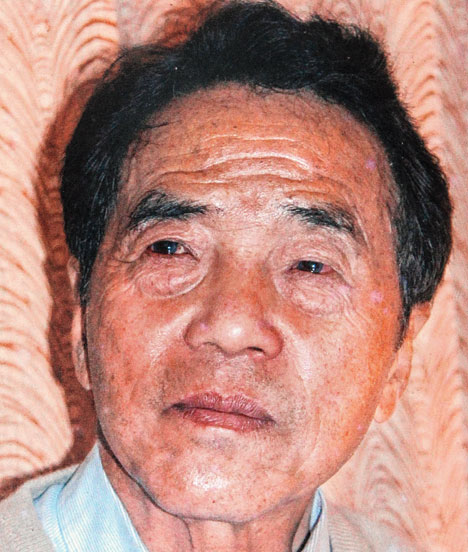
Indra Bahadur Rai
Rice Pudding
AT THE MOMENT, I had not been able to comprehend the incident clearly. I had not reckoned that it had some meaning. The incident—if it might be called so—was as follows:
Though I had many times read and written about the gusty flow of River Teesta with a hum at a number of places in stories and novels, I had not yet heard the real sound of the river flowing downhill to my satisfaction. I also had heard from those who went to work on Teesta bank both in winter and summer that at midday and midnight, it flowed with a long and overflowing gurgle. But then, my thirst and hunger to listen to its hum had not been quenched by our occasional stop along Kalimpong-Gangtok highway, when I stood on the bridge for a while, and had a quick look of the river on both sides of the bridge.
The sight of innumerable ribs of the past, which were worthy of calling ‘great’ stayed scribbled on apparently sleeping layer of sand beside the flowing gush of greenish-blue torrents of water, the melodious crooning of Teesta amidst an imagination of weeds and plants being fanned by the slap of gusty winds—tickling a different splash deep inside—in addition to a different sound of flapping wings, drove me to a different lane of memory…
During one of my returns from Gangtok, I planned my overnight stay there, on the bank of Teesta for a day. The guest house was being renovated, and the room I was allocated sent a strong reek of freshly applied lime washes. Its bight whiteness was quite uncomfortable. The guest house adjacent to it had been occupied by workers—carpenters, masons, painters and porters—busy in its renovation. They make up the plot of this story.
They all had cuddled up, making the day a special one, and were busy in chitchat, each trying to overtake the other. Some were cooking, and their talk was centered on the same. In fact, they were preparing rice pudding. I don’t enjoy discussions on foodstuff. Yet, I had no option in hand. I listened to their chit-chat.
Outside the door, there was tranquil brightness of the time just past midnight. After I spread the mattress on the cot and looked out once again, the daylight had waned into dust, whose dimmer light, spilled through boughs and leaves of the trees around, had now touched them all.
“If we are to have rice pudding, we need two liters of milk for 250 grams of rice,” said a voice repeatedly, emanating from someone with bright but caved-in eyes. He added, “For the quantity of rice we now have, we need ten liters of milk. How much milk did you pour?”
“How much? It’s four liters.”
“Fie on you! Pudding with just four liters of milk at such a place like Teesta!” said the same voice that was bellowing earlier.
“Pudding in four liters of milk!” he said in such a way that it seemingly was a black, tattered patch, and he was demonstrating the same to everyone.
“For real rice pudding, we require many ingredients,” said a constantly rising and apparently ripe tone. “In the first place, the quality of rice you brought is wrong. You should have brought nuniya rice with fine, smooth grains.”
“Even aluwa is extremely costly here,” said a voice, apparently of a fat, stout man. “They cheat us, exchanging rangune aluwa for hill rice.”
“You corpse! It’s just like hill bayarni,” said another, seconding the previous speaker.
“If the ingredients are available and you want real pudding,” he said without looking at anyone, “old nuniya is good. Black nuniya is even better. It sends a tantalizing smell. Should be cooked in some ten to twelve liters of milk. If it’s milk-water, you need about fifteen liters. While boiling to send off five liters of water, all rice seedlings get crushed into a paste, and all you have is gruel. If the milk is pure like a punch, the seeds remain intact. Gruel-like pudding gets overcooked from below, and reeks of the same all through. One who gets his share from the bottom is…”
I don’t know if he said, ‘It’s like brushing teeth’ or something like that. I didn’t clearly get him.
After a while, yet another voice came from another end. “Will milk alone do? You need pasta, raisins, almonds, cinnamon, coconut, bay leaf and cloves too. We should cook it in steady, mild flames. Raisins should be added later. If added before, they can all get smashed,” it said.
“What difference does that make—I mean, adding all those things?” asked a shrill, curious voice.
“It’s for great taste, for flavor, for energy,” shouted all, buzzing like insects.
“Beware; you can be addicted,” said a voice, seemingly like the remnant of the earlier bantering. “You may seek for pudding even in dreams; may console yourself that way.”
“If pudding is prepared here, the flavor reaches the nose of a passerby there on the road,” said another man.
Carefully, I tried to feel the reek of their pudding. No, I could not feel any of it.
“Your pudding! Its flavor doesn’t even reach someone sitting very near,” said the oldest of them, blatantly.
“It’s you who refused to contribute cash, when we proposed to overlook everything else and eat perfect rice-pudding,” he said in reaction. “We should eat and live on, what if we have to steal, earn or postpone others’ payment. We must have the guts to live on.”
All of their voices muted.
I happened to be waiting for the same silence. Giving a tapping on the ground in reaction, I entered my room and started moving about. The announcement of my presence forced the flow of their chit-chat in another direction, as does a rolling boulder to a river.
“It doesn’t suffice to gather ingredients. One also needs the skill to cook them,” said someone, making an initiation fresh like white vapor.
“It’s not good to eat pudding every day. You should find proper time and mood,” another one said.
“If so, eating pudding is not easy,” said another, letting out an acrid shout. “Impossible,” he said.
Unable to hold my laughter, I looked out. Everything looked quite ordinary. The dark trees stood motionless in the night.
“Stir! Else, it can get burnt.”
“Maybe it’s cooked now.”
“It’s cooked.”
“No, it’s not properly cooked yet.”
“It’s ready,” they claimed, and removed the pot from the fireplace. I could sense that they all moved a few steps backward, while others selected proper spots for themselves and sat down.
While they were eating, someone asked, “It smells of something uncomfortable.”
“I feel the same.”
“It’s firewood. I have carefully smelled it for long,” said someone. Their suspicion kept rising and dying out.
“It’s short of sugar,” said someone and walked a few steps, brought some sugar and added to his share.
“If you like pudding to be sweeter, add jaggery, not sugar. It imparts a great color too,” said the man who initiated the conversation before.
“The dark jaggery won’t do. Palm jaggery that comes in layers is the best.”
The second one offered an immediate corrigendum: “How to eat pudding with black jaggery? Pooh!”
“Pooh! How much should we talk about eating? You have hardly had any pudding today, and you started talking so big. It makes me ashamed.”
He had said it aloud enough to make me hear. He had thus tried to lighten his guilt to some extent.
They all got busy in a few gulps of pudding.
“It’s in no way better than mere rice in milk and sugar.”
When a bold voice made this remark, they all burst into laughter. The man, who claimed of good cooking skills, laughed for the longest time. When he carried on his intermittent laughter, others laughed out as well.
After four years, I comprehend the true essence of that incident today. The pudding they were making is like our life. Our minds are full of ideals that make us think we should live life this way, put it to such and such work, and use it this way or that. In reality, however, our life—always plagued by errors, scarcities and wanting—is more like their pudding, which was like a crude parody of the ideal pudding they were talking about.
Couldn’t life be like Teesta, which is nothing but an ideal, no matter where it flows and how?
 Translated from Nepali by Mahesh Paudyal