Essay:
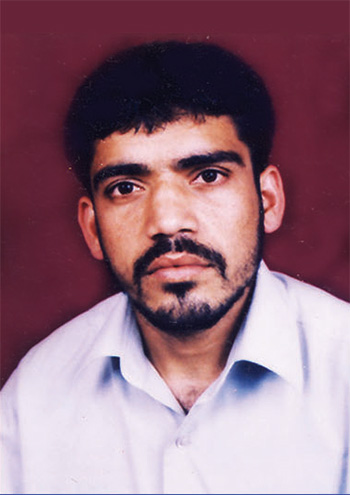
Dolindra Prasad Sharma
A Sight of a Whole Nation through the Latticed Window
At dawn I set out on a journey. Mist balls are sparkling like pearl beads on the plants. The sun shines on the snow-capped mountains and hills as if the fire is giving off the heat to sustain the creation. The sweet feel of breeze is indescribable. People have come out sparsely. Vehicles dart smog at the travellers' eyes. I feel like asking a question, where are the broomers the Metropolis bought for millions of rupees?!
After my returning home from my daily work –out, there appeared a national daily and my eyes lay on Yadav Devkota's title 'Vivekvirodhipathsala'. I didn't feel like drinking tea after reading the article:
"Acts like making the nation weak, selling rivers, kowtowing in front of the foreigners so as to keep getting hooked to power and position, and importing goods by weakening national productivity are all performed not by people from villages but by those in the Singhadurbar, by those who reside there. Handing over the classified information of the country to the foreigners for vested interests is being expedited. Why, just after they step onto the Singhdurbar, donot only rulers change but also bureaucrats do? What is there in the school of the Singhadurbar that corrupt its disciples?"
As I was analyzing the article, the process immediately reminded me of it:
"putting everything aside, I'm seeking a task
In the country, I'm seeking a man
……………O travelers of the country
There I'm planting the seeds of the new future
In the country I'm seeking a man."
This composition of Vishwonath and the melodious voice of Shishir Yogi gave my mind a shockwave. By cursing myself, I hit my head on the wall of the Singhdurbar once. As I approached the West Gate from the East Gate through the South Gate, my pulse instantly stopped. My eyes went round and round the statue of Prithavi Narayan Shah. It has been the school of all the Nepali, which at the advent of Republicanism in Nepal was vilified with vigilantes' garland made of shoes, and with their spitting on it. When my eyes entered the Singhadurbar through the main gate, as I could not control myself upon seeing the scene inside there, my left hand of itself slapped my right cheek. I had read about the governance systems before my birth in the history books. I cursed myself as it crossed my mind that the republicans who had once dubbed the Rana regime as the dark age and are now found propping with iron shafts the Singhadurbar, now shabby and dilapidated, built by the Ranas are wallowing in narcissism by striking labour agreement with Malaysia and Japan to export the Nepali youth there for job.
As my steps were leading me towards Putalisadak, having landed me on Mugu, the waves of Rara started saying, "Last year, the prime minister said within a year no Nepali, by stamping on the national flag, ought to go abroad for menial work. He coughed up that the well of prosperity in Nepal would quench the thirst of people for happy life. Now the pure water of the lake is asking me what those who won election by promising them the Singhadurbar on their doorstep are doing at the latticed window. Aren't those who reside in the Singhadurbar getting prosperous by slyly occupying and illegally owning the land where the prime minister's residence stands? Is it true that they are swallowing Khulamanch? The eyes of the people are hurting themselves as they wait for the Singhadurbar to show up in their villages, hasn't the Singhdurbar itself been gulped? Or else, it should by now be right there in their villages, shouldn't it?"
Forgive me, Rara!
I cannot speak anything. My lips are dry and cracked because of these anomalies. All my reality has been transmutated into dream. I have got stuck on a twine between the confluence of reality and dream. Wherever I look, there loom mountains of problems. It seems there are no gardens without weeds. I am looking for a brave Nepali who, devoid of selfishness, can work through the piles of the problems and, who, with the broom of self-confidence and self-esteem can sweep away such trash of the anomalies of my country into the rivers Mechi and Mahakali.
When I reached Putalisadak though along the walls of the Singhdurbar that should take up the pains and understand the sentiments of all, I took out the mobile phone to listen on the you-tube to Narayan Gopal's sweet voice in order to console my lovely Rara:
"How to sympathize with and console the heart
This anguish is the only support to life
This desolate night repeats and goes
When will the breath make one leave life".
Neither in the past nor in the present did the latticed window of the country, the Singhdurbar, listen to the song composed and sung by Narayan Gopal and music- arranged by Pankaj Sigdel. Will the man I have been seeking listen to it?
I was floating on the rivulet of the memory of listening to the radio program, ' latticed window' when I was an adolescent. I had not understood the meaning of 'latticed window' at that time. It has been long since I understood that latticed window is a bird's eye view, likened to watching minutely people, society and the nation through the binoculars.
The window with eyes. An art. A philosophy.
I had heard somewhere that people in charge of state resources would have gifted the foreigners with the latticed windows. The sight viewed through the latticed window carved in Bhaktapur is more real and beautiful than the outward art on the window itself. But, why is the window through which to peer at the nation not as beautiful and real? Why is it shrouded by haze? Isn't there somebody brave enough there to ask this question or has he/she not been found yet? These various thoughts kept nagging my mind.
The importance of the latticed window is historical. There is a latticed window found nowhere else in the nation in Naradevi, Kathmandu. People from home and abroad come to observe and relish the perfectly made camera-lens like window. One day when I was talking to the culture expert Tejeshworbabu Gonga about the latticed window, he suggested I go there and observe it for myself. It was perhaps then when it was not customary to cover the windows with curtains that the latticed windows came into existence. But, these days curtains are being used everywhere. Astonishingly though, today people take the rooms without curtains at the windows for the ones for rent. But there is no way we can compare the ornamental decoration of the latticed window with that of curtains.
In studying the history of Nepal, I found out that the window has been in existence since ancient civilization. It has found its expression from the 5th century of the Lichhavi Period when history was first documented. After the unification of Nepal, Prithavi Narayan Shah chose Kathmandu as the latticed window to peer at the whole nation. The latticed window of the nation is the place which the men in reign choose to look over the people and the nation.
In 1908 A.D. the state bought for 20 million rupees Chandra Shamsher"s private residence which he used as a simple latticed window. Ornately decorated to attract the attention even of the world itself, this latticed window was used to address the pains and agonies of the people and country, and witnessed different phases of changes. Decorated with the white crown and clad in the white sari, the latticed window, which has been watching over from Mechi to Mahakali, from the Himalayas to plain Terai and over the whole world, has stood still with its eyes diseased, as it has passed through different phases of transformation.
The latticed window initially had 720 holes in which the then Rana rulers kept women to quench their lust. The culture expert Gonga said, "They would kill one another and perform lustful dances, 'raslila'. Everything was concealed. Today is the age of science and technology. In democracy, no matter how cleverly you hide something, it gets disclosed. No curtains or covers work today."
No matter how many eyes were added to the window, they all got diseased. The fire of Asad, 2030 B.S. painted deformity to its physical structure. Those eyes were blackened by black smoke as if a crow got lost in fog. In public gathering, our grand fathers and grand mothers were heard saying that it was set on fire on purpose.
There were 17 hundred rooms in it before fire. Libraries and other things were completely destroyed. A symbol always of misappropriation of state resources in the name of reconstruction that would fill the stomach of the people in authority like a water pitcher is filled with water, the colossal building was once again terribly shaken by the disastrous earthquake of 2072 B.S. When will we recognize our leaders who, living in the heart of the latticed window built by the Ranas and the Panchas, blind themselves with some strong plant sap? Who will understand them? How to make them understand when the so called permanent government, bureaucrats, have stripped their eyes not only of their glasses but also of their pupils. How many times should we be burning tyres in the names of political transformation to reveal to the people the naked, pervasive character of the so called guardians of our country, who are good at blame game? How long should we be polluting the environment? How long should roads be jammed?
It is but natural that I suffer from delirium ( hair stands on end) when I remember the scenes captured in the lens of my eyes of the real character of those who enter the latticed window by taking oath in the name of the nation and people. It feels as if brain tumour is attacking my brain. Heart beats stop. Neither dialog nor silence! Where am I, what am I doing? The pain of forgetting oneself is no less than the agony of mentally unbalanced people locked up in mental hospitals. I curse the troupe of leaders and civil servants who are deforming the beauty of the latticed window by staging loot after loot.
The Japanese avaricious of development made verdant Hirosima and Nagasaki once devastated by atom bombs. But people hungry of destruction here have turn the verdant into the barren. They have looted the nation's resources to cater to their personal, vested interests. Despite the effort by the singer Pasupati Sharma to improve on such anomalies by singing a popular song 'Lootna Sake Loot …..', those in power are still messing with the blood and sweat of common people.
Dubai, which most of the time suffer from scorching heat of 44 degree Celsius, is seen capable of maintaining environmental balance by keeping it green, while in our case, desertification is the destiny of our green nation. They have not stopped messing with fruit buds and beautiful trees and plants grown on bird mature. They have dug up the roots and eaten up leaves, branches and tendrils. That is why I feel like cursing them.
I get even more frustrated to learn that those interested in doing make-up in the name of boutique cater to their relatives by forging bills after bills. In Austrailia, people can observe the parliament proceedings unhindered and visit any places carefree and unobstructed, while in Nepal, people need the pass to enter the latticed window. It is a shame that the access to such a pass is only possible with political links and through solicitation and entreating. Curse to their imprudence.
One day I remembered the things I had talked about with the chief secretary Lilamani Pokharel:
"Its frames should be pulled down and entrance should be free. Technology should be installed so that it is transparent even from outside. I cried at the top of my voice saying that bootlickers of political parties should not be allowed at the office to be busy talking to their relatives for hours over the telephone. Today my throat is obstructed. I, who have been looking into it minutely for the last four years, was not left unpricked. One minister even danced a naked dance of corruption and displayed his/her torn panty. I cursed it and making my mind up not to ever show up before him/her in life, I stitched his/her panty with my resignation."
How happy would the people be if such ghostly activities of economic manipulation were not performed? As I, battered by such questions, sat at the balcony, I was peering at the latticed window. The beep of the mobile phone disrupted my concentrated eyes. The picture of a familiar secretary appeared on the phone. The man as a stubborn child was crying "What to do? My brain drain is just as likely. It is improbable that I can get the responsibility of a suitable ministry in consonance with my experience." He went on," Two years have been spent moving here and there since I became the secretary. Now only three years is left. Please do something for my transfer. I started brooding. How could the journey of prosperity be propelled successfully if the communist government of the two third majorities cannot assign bureaucrats with appropriate responsibility based on their subject expertise and experience?
The Singhadurbar or the place where the lion dwells. Just as the king of the animals, the lion, is allowed to rule the jungle, the rulers of the country are allowed to reside in the Singhadurbar. I had read in history books that while the youngest wife of Chandra Shamsher at the balcony of the palace was looking over Bagdurbar and other palaces, he chose the best and the most dignified name for his palace and called it the Singhadurbar in accordance with the tradition of competition in which the Ranas would keep trying to prove that they were far superior to their brothers and other courtiers.
During the Malla, Lichhavi and Rana Period, the Hanumandhoka palace was there for government administration. Narayanhiti palace was built in the British style. There is the Singhadurbar there. Nepal should have peered at through the latticed window, but it has been peered at through the eyes of the north, the south and the countries beyond the seas. Through the green dollar and international power centers. Through the window, poverty, scarcity, absence of education, hunger and utter pain of the nation should be perceived, but unfortunately, the pupils of the seeing eyes are yanked.
Good governance should have been taken care of, but perversion, crime and immorality are being protected. Through it is supervised the factory of infallible medicines that produce lies after lies in the guise of politics.
People enter through the window as needles and gnats and come out of it, turning themselves into pestles and elephants.