Interview:

Momila
When The Tradition Is Questioned Consciously That Becomes Post Modernity
Interview / Momila
I'm engrossed with thousand griefs something like living desires of my eyes -Iswor Ballabh
Time was running out of my hand ever since I determined to take an interview with the poet Iswor Ballabh. But, this day favours us. Into the word-image of mine, you'll witness the meditative subjectivity, a complete wholesomeness of life under the Bodhi briksha – a holy tree - of self –realization. Like an undefeated mountain of awakening interrogations and self –ventured questions, Iswor Ballabh has lot to say. Into the poems of this self – created –poet of our time we can find the love –song of the God and one's heart is bound to be overfilled with the beautiful song of mysterious existence called life.
Time: evening
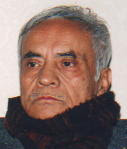
Iswor Ballabh
Namaskar Dai
Namaskar
please forgive me for the fault I didnot commit. I'm four minutes late because of the heavy traffic
Poetess Gita Karki, Iswor Dai and me are sitting around the coffee table. In the corner of a certain cafe
How are you feeling this evening?
Well! This get –to –together for our conversation is quite beautiful. I'm in a mood, eh! you see
Let's begin our interview Dai. Reaching this stage of your life, how are you observing the life in the relativity of your own existence?
While watching form the window of the present, this contemporary life as I've observed so far is the subject of study. Something Re-search. Life –revisited? It's quite difficult to say anything instantly. What others have to say about me is a different thing. And I don't know about it as well. But I've to watch my inner-self. Else, there's no way-
If that's so. How would you like to judge your past?
Those footprints of mine which have reached here, according to the context of my age and time –or let it be my external experience of life in a way, I've found this life a sort of mystery. But, very often when watch without any sentimentality this life seems to be pretty solid –material atomized within the material world. I don't feel like interpreting it with any metaphorical substances.
While writing a poem, what interest you more –mystery or an object?
Infact, neither of them. In the writing we always stood in the favour of INNER – call. The inner meanings, whispering, gasping –all sorts of inner shifts of mind or say heart. The call of life Earlier, when they asked us –what stuffs do you write? We said –we write life. We said –we write the life –in its clear handy meanings along with its unpredictable existence of the history. They authored their own understanding of life and nevertheless, we too stumbled upon our alienated visionary insight. But, if you're to accept this from your inner –being you'll have to Re –discover the greater horizon of existence. In the world of literature a mere WORD becomes the life. But, to define the depth and greatness of life we definitely need time.
You are one of the propounders of the 'Third-Dimension'. The key to understand life, that is 'the depth' so far the movement concerns –did you find yourself able to present it in the context of the 'Third Dimension'?
Till this date, No. We created our own ideologies to do so and so, The life should be taken with its total 'wholesomeness' –we said. Life should be taken, observed, watched in accordance with the relativity of mental or mindfullness –awakening. In the journey from the underlying 'Third Dimension' to the present atmosphere, what I found is –this life is a mystery as aforesaid but one cannot describe it, in its complete TOTALITY.
But, when we focussed 'ideology' practically, we said –there should be the TOTALITY of life as it is not an alternated metaphor. Infact, we did a lot to create this TOTALITY in our writings, however –I've a juxtaposed feelings nowadays that we could not endure it.
If so, then can it be sensed that you're too following the path of the 'Leela –writing's ?
Actually, this Leela has become a problematic affair to me. I don't know how Indra Bahadur Rai said it but the Leela. He even published his prefaces of the Leela in 'Rooprekha' (a literary magazine). He has been forwarding this as an idea or say thought.
My problem is in the axiom of which philosophocical frame -work is he forwarding, I don't know since I did not have any dialogue with him yet relating this term. But, sometime I find myself thinking technically about this theory, this term Leela. In the western world Leela can be taken as an 'illusion'. But in the East that's not illusion. It contains mystery. Mysticism, you see! Indra Bahadur Rai provides us an example of the God Shree Krishna (a Hindu God of love and compassion). In the assembly of Kansa (a maternal uncle of Krishna. The merciless, cruel King), a strong man saw Krishna strong. Mother saw him compassionate and child –like. In this way other men saw Krishna with their own relativity of senses, plus sentimentality and insight. Indra Bahadur Rai described this as the example of the Leela.
But, what is the relationship, association with the literary enterprises –I've not yet thought about it. If I'm to talk of the Leela then I could never conquer the Mahabharata and the Ramayana (The holy scriptures (epic –book) of the Hindu). Being de–gravitized from that hemisphere, I should present you with my own understanding of the Leela – which would naturally be too complex to put into words. And I won't think that way, let alone my lonesome excursion visits there...
Then how will you baptize the name of life which you failed to express in its TOTALITY, in its wholesomeness?
My effort has always been to express life in its diversity. I've been expressing this in my writings. If you develop any sort of ideology and principle in the interest of your will and desires, that may not be an expressive debonair et all, but when you think of them you'll experience your commitment towards them. The more you feel the more you express. And the degree of expression will naturally be heightened. Indeed, the degree of your self –realization plus expression lead you towards the TOTALITY, wholesomeness.
In your opinion, when will be the total –wholesomeness or a complete totality?
Not now, it won't happen accordingly.. it takes time as it's so far and distanced form us... but when the desire to walk beyond the anonymity germinates inside you, naturally –you see! You're almost near to the destination. Then you'll have to foresee the yet –to –happen time, that is ETERNAL.
In this way you're always destined towards the linear existence of time and age. so, I always have loved and still love the instinct of mine –that the poems I wrote, the thoughts I created were, perhaps not mine et all. Others may have the same experience of the existence. This linear journey of a man which he travels from the beginning to its end! This journey of ours keeps on heading towards some ideology, theory and principle.
Indeed! There's a relative development; a growth. But, this doesn't mean the doom's day. There's no INFINITY at all, isn't it –Dai?
Infinity exists. It is. But, there's no end to INFINITY.
You're unsurpassable in prose –writing, You're written fictions, shout –stories. And you've pencilled excellent essays. In which genre of literature do you find yourself satisfied and contented?
Well, there's no satisfaction anywhere. I've not enjoyed this thing called satisfaction till this date. Perhaps, I'll never be satisfied. Because, satisfaction doesn't bear any meanings any more. And, writing a poem, short –story is not a MEDITATION. I often observe so –called contentment, satisfaction in the silent face of a meditative person but, I'm always skeptic whether the same persona is enjoying the very beauty of joys and happiness which I enjoy.
I don't have that experience. But, I'm never satisfied with my poems, stories and essays. May be, this is the way how one should write. Perhaps, one has to write when he/she is unsatisfied I'm writing in the same way.
Then, why should one write when there's no satisfaction et all?
This is perhaps like this: after reaching the ocean why to look for a glass of water? But, we are proceeding towards the ocean. That's why we're in the process, this continuity of journey.
The next thing is language. When, being addicted to writing –one naturally writes. And, there's neither a question of meaningful nor meaningless writhing. What my point is –a writer cannot simply answer why is he writing after all?
Anyway, you're looking for a fullstop –where your satisfaction ends, aren't you?
Perhaps! I'm on my way towards it. I may achieve it or not it's a different thing. However, proceeding ahead –I am. Yes, proceeding somewhere but still there isn't any belief in me whether I'll succeed it.
This means you can't express life in its complete totality, isn't it?
No. One can't. It's too difficult. We cannot express life in its complete totality, poem in its wholesomeness, stories in their universal appeal. It's really difficult.
If it's so, then One can put a big interrogation mark to the success of the literary movement: The Third –Dimension.
Yes, of course. There has always been a question –mark. Recently Indra Bahadur Rai Dai come to Kathmandu. He talked on the Leela. I told him among others –that the time we founded 'Dimension' –is about to reach its fifty years. And I'm still not able to find its ending till this date. Again, if I carry the new theory? Now, it's quite impossible, In reality, I can't manage-
Then, if I can't find the ending, first –let's try to be finished with this 'Dimension' only then, if there's time, if my falling age agress with me –may I see the other thing. Otherwise...
Atleast, there's an effort to end its ending in one sense. In this situation where's your writing heading?
Nowadays, I'm thinking or let's say I'm forced to think of the totality of creative –energy of writhing with its diversified form and approach. Earlier I used to write poems only. That time I had a queer experience that I was becoming simply a poet. Just a poet. I was beginning to sense my persona, inner –being as a common literature, you see!
Now, I watch differently. Whatever I'm writing and have been writing these days –I experience some sorts of difficulties and complications, while watching myself. I think a man like me always faces such odd experiences: What I am? I'm a poet. Not only a poet, I'm a fiction –writer. Not only a story, table –writer, I'm a lyricist. And not only the lyricist, I've written many other stuffs. I write prose. Now, the question is : What really, I'm? Who am I –in all these different associated –genre? Now, I've to define myself and should find a typical adjective. A man like me should look out for an adjective. Isn't it a post –modern situation?
If it's so, then: you believe in the pluralistic form of post –modernity?
That's simply a behaviour, a habituality of the Post –modernity. For me, the Post –modernity means something like this: When the tradition is questioned concioulsy, that becomes the post –modernity. The day when one claims the end of the modern age, that becomes the Post –modern thought.
Will it be the Post –modernity simply because someone claims?
If somebody carries the representation of some thoughts, that is Post –modernism. For example; from Derrida, savssure to Nietzsche they were themselves not Post –modern but they were carried by the impulse of Post –modern thought, a meditation. Those Post –meditative thoughts are still demanding our voices. They're finding new dimensional approach, subjects and grounds.
In your opinion what are the different concepts of the Post –modernity?
If one raises a question to the traditions consciously, that becomes the Post –modern thought. It doesn't take four hundred years to become a post –modern. The moment you declare that all you've created, done are somewhat different from the modern perspective there starts the post –modern momentum. I've been experiencing this.
That's a fact because there's an essence of deconstruction of construction in the Post –modernity, we've raised questions to the CONSTRUCTION –work that we created earlier. The moment we raise question against CREATION that naturally becomes de –CREATION.
It means, is the beginning of previous consciousness with its all background a post –modern thought?
Absolutely right. Whatever you feel as the previous consciousness –are still simply the feelings, provided that you think beyond it, that is Post –modernism –when the previous unconsciousness departs from the upraising neo –consciousness, that is to say a post –modern flow.
Foregrounding neo –experiences and consciousness in the modern conscience is a post –modern thought. Emerging neo –thoughts with the rejection o previous ones create the sense of modernity which is to say a post –modern thought.
If it's so, then –are you looking for an adjective to your writing?
Yes. Adjectives! It's an essential ornament for writhing. Even time needs an adjective. For example, communists do not like the post –modern thought. Because they have the habit of dwelling in the same ancient lake.
Their Marx will die and Lenin will be defeated if they take post –modern thought. The day when Marxism and Leninism throw the shabby dresses and discard the drooping shoulder which a burdened by the shadow of ism –that becomes a post –modern thought. When Lenin changes and Marx opens his eyes to encounter the neo –sight of the globe –that would be post –modern thought.
In the context of modernity, whose consciousness do you think is the beginning of the Post –modernity?
I've heard the chorus song of post-modernity in Nepal nowadays. We're all in its howling. When I think of the beginning point of post –modernity, I find timeless and spaceless epoch. But many scholars think that perridian concept is the beginning point of the post –modernism. Actually, Derrida was introduced when other folks like Ferdinant De Saussure and C.L strauss started to theoritize the concept of the post –modernity.
But as I view, post –modernity has always been existed before the birth of Derrida. Forty or fifty years ago when we were forming the 'Dimension', Derrida was too doing something. Those days where were Derrida and others? We used to say in our writing –" There's a complete fullstop to the old form. We are all new sentences."
Wasn't that a post –modern thought? Ofcourse, Jacques Derrida theoritized the post –modern –thought, but the post –modernity had always been there before the birth of Derrida. And the same came was applied to us.
Then, can it be assumed the 'Third –Dimension' in Nepali poetic –literature was unambiguine theoretical starting point of post –modernism?
By doing that our entire journey, our findings would be entitled in the garbage of the time. When the 'Third –Dimension' is known as post modern output in Nepali literature, it will lose its worth. Obviously, we shared certain assumptions of post –modernism, it is not an essence for us to be post modern.
It's like a feature, an adjective. 'Dimension' doesn't need to be post –modern. But, still I say –according to language, thought and querries there was the essence of post –modernism in the 'Dimension'.
In which figure do you enjoy move, being introduce as a essayist or a poet?
I'm a poet by heart. I would like to be a poet though the human desires made me an essayist. I feel I'm always near to poetry because poetic heart is the fist enrollment of an literary genre.
In the year 2029 B.S your book of poems –Aagoko phoolharu hoon Aagoka phoolharu Hoinan (Literally –" They're the flowers of fire, They 're not the flowers of fire". A little of a poetry –book written by Iswor Ballabh.) –recieved Madan Purashkar (a prestigious literary prize). I was young then. Really, I was hypnotized, overwhelmed by the book's title. Where does a flower of fire blossom? I used to wonder. I feel, from that moment my mind and heart tasted the nectar of poetry. The voice of Iswor Ballabh had implanted the lust for poem in me. Don't you find the title of that book more beautiful incomparision to your other creations?
Yes. and why not! I still remember. one of the literateurs from the publisher was nearly going to eat the title of it. I told them –I loved this title, this is my request –I loved this title. Only then, the title survived.
I feel the beauty of that title is still mesmerize us. The sublime title creates an eternal touch: is/ain't –a bionary poles which carry the essence of human nature
How do you define literature?
Earlier, I used to talk large taking great references from sentimentalities, emotions and what not? Nowadays, I'feel literature as an expression. Where the word –images are its interpreters....
In one word, how will you show the inter –relationship between literature and life?
Expression....
Expression can also be essayed through colours and tunes . Don't you feel the need of Literateur's own defination?
There are WORD –images in the literature. I think I don't need to explain any more.
What kind of risks have you found in the course of writing?
We've faced a lot in the time of the 'Third Dimension'. Risk in rejecting rhymes and meter in poetry. Risk in destroying the traditional langrage while searching subjectivity of a persona. Risk of the thought when we took the whole poetical –enterprises as a mere IMAGE.
Those days, we were charged as deconstructer, destroyer of the hegemony of language and philosophy when we raised questions against the tyranny of traditions. But, we're here because you're beyond the tradition.
Any certain challanges appeared while taking risks?
A practice example: when we (Bairagi Kainla, Indra Bahadur Rai, Iswor Ballabh) were in Darjeeling (a small, beautiful hilly town in northern India where the 'Three' founded the ' Third –Dimension') then . We sent an invitation asking them to -come if you like if you want to hear us, come –or else it's up to you – They did not come to listen to us.
Hundreds of them used to come in such poetry –recitation programme. But they did not come to here us. Among very few we recited our poems enthusiastically.
You travelled with trinity of the 'Third –Dimension'. In which sense do you yourself different?
In the movement we were erected in the same background. But, now we've our own wings. So, Indra Bahadur 'is' Indra Bahadur. Bairagi Kainla 'is' Bairagi Kainla.
And, Iswor Ballab 'is' Iswor Ballabh. Nothing more.
It is often said that the author dies after the creation. Do you believe in the death of author?
In a sense, the author doesnot want to seperate from his creations or let's say : the death of a poet is not acceptable. But in reality, the death of author is inevitable. The author enjoys his existence when he/she is in the letters, sentences, images engraving his entire mind and heart in it. But, the time when the 'text' is finished, he too is finished. There's no way-
But the nostalgic experience does possess the author, it's true. If this experience of omniscientic –feelings be detached from the author, then we can say the –Author is dead.
Do you meant to say that the author does not exist et all in the text after the accomplishment of the text. The author becomes a deed thing?
Ofcourse, yes. That's why we had a continuous philosophical quarrel with Descarte. He always attacked the subjectivity.
His quotation –I think, therefore I am –is merely subjected to the authorization of a complete I –ness. Where's the 'being'? where's the 'self'?
In this way we've expressed this thing in the laboratory of mind. This –thing. Actually, the post –modernity was a multiple faced of THING –NESS. Indra Bahadur Rai says: You thought about this thing: THING-NESS, the subjectivitism. That was my term.
To speak frankly, the term "Subjectivity: the thing –ness' belongs to you in the 'Third Dimension'. Then, whom do the TOTALITY and the IMAGERY belong to?
Indra Bahadur Rai used to say : to capture the things complete, pure any without any delay. In the sense TOTALITY must have belonged to him. And here, Bairagi Dai used to verse his language in images. So, 'Images' belongs to him.
But, we're all centered within the de –centrelization of the objectivity/ TOTALITY and images. I never Knew whether we ever exchanged, shared our WORDS.
I've heard that you all used to write poems in the desolate room making yourselves pseudo –sufferers. The artificial pain –hunters?
No, not like that. In this life I never experienced aloofness, saadhu –like disattatchment. But, let alone love, compassion and lust! We loved beautiful women, didn't we? They too, desired us. Such beautiful incidents happened in our lives. It seems like a history of my age.
Indeed, those memories are counted. "Lonesome" I used to be somewhere in the corner of my journey –but, this 'ALONE –ness' doesnot sound beautiful. A saadhu –like term. But, many things should be confidentials. One should keep certain affairs secret.
To register those confidential- affair in your torn –heart gives you pleasure.
Now, something personal. What's your relationship between your love –life and married –life?
See these letters. I often wonder whether I really wrote them. I used to be scared of it, really-
Really!
Yes, After having five Kids at home,I've a fond to write something to my wife: I'm pretty fine here – That's all. You can even publish if you take them as love –letters.
But, the ideal love –letters which I've always admired, well –I never knew, if I ever wrote them.
Haven't you written such ideal love –letters in the form of poetry?
I've never thought whether I've ever expressed such delicate feelings, romantic sentiments in my poems.
But sometime/somewhere they might have been expressed, how –who cares? Now, who knows?
I wonder I've put a couple of flowers in Deurali when in the lonesome journey I feel you're with me.
The time when I wrote this song she was not with me. If she were by my side, what use was there to write a song?
Perhaps, the song became your love –letter?
The above song I mentioned is our floklore, isn't it? Indra Bahadur Rai has re –constructed a story: Kathputaliko mann ( The Heart of a Puppet) by Re –writing the old fiction
Perhaps, we narrate our old love new. We're fond of watching our old love in new editions. Perhaps, this is the way, art of LOVING...
I've suffered a lot in the life of De –lay
And, how come your forgotten memory To –day!
What a strange feeling, this is –I know not. Have I ever fallen into a beautiful TRAP called love? I wonder. But I liked, really –I liked someone, but –well! what to say! How were I supposed to express my delicate feelings! There was always a fear to being denied; being unaccepted by someone whom you loved so tenderly, so dearly. Others may also have the same experience. If the answer, reply comes negative then naturally one will feel the fear of being de –feated...
Obviously. Well, you've always sketched yourself (as it is seen) as a man who never defeats. One can observe in your creations: either they be your world of poetry, the song of world –or –the world of your WRITING.
What use of being a victor defeating others? There's no question of defeating someone else rather than being a victor. There's no defeat of somebody else in the victory of mine. I'm telling you the truth. I've never defeated others...
If the co-travellers who walked with me in this lonesome journey have been disappeared in the corner of the existence :how could you say, I outnumbered them?
There are lots of ups and downs in the course of this life's journey. Did you face any stumbling –blocks, difficulties which you experienced in the codessey while retrospecting through these present ages?
Sometime I wonder about those wanderings of my personal existence. I'm destined here in the destiny. But, I still remember those paths, trails, highways where I'd once travelled and paved my way; streams and river I onced crossed.
And sometime, I pick –up my memories thinking all these stuffs as illusion. Atleast, I were to come here anyhow, and I came. But what about the destination? Where's the ultimate destination, I know not. I've reached somewhere, and it's true. And, it's also true that everyone reaches somewhere. But, what to talk of destination! These days I think about this thing....
How is the Nepali literature paving its path in this present political atmosphere?
Nowadays, I see the mushrooming of absurdity everywhere. Actually, literature exists with life; but –life is not an easy home –work any more. In the morning you hear the news of death, death and death of human beings. In the afternoon you find yourself reciting your poem somewhere in the dark age of the present time where you voluntarily exist.
You exist, but not more live nowadays.
In your own country, a couple is killed brutally in your court –yard, and somewhere in the dark portico some couple exchange their wedding –garland. It's great of us that we were garlands while, at the other corner a human –couple is being murdered. Our face: the face of literature has been transformed into the helpless scare –crow. In the same space not in the words of utopian poetry –but, in reality man is dying starving. And, in the same space, the other men live talking at large of enermous political speeches. Talking volumnous principles and theories and ideologies. What a great nonsense!
We're simple surviving in this contradiction. In this confused political weather literature is being dominated, wasted and destroyed. But there's a question re –birth in my mind whether the poet belongs to this world or not. The poems which were written, are they really poem? Is this the real garland which I'm wearing? We hear the terrible news as our habit.
So, what's the relationship of literature with the world and the life? After the couple of world –wars, Europe gave birth to many great writer even in the time of great absurdity. But, not a sight glimise could be seen here. Absurdity marches in our life everywhere.
In your opinion, does the realization of death gives you any meaning to life?
Well, you realize the sense of death only after observe someone else's death. Perhaps, there won't be any realization of death any more. Earlier I used to say –others can not die my death.
What a philosophical illusion!
Nowadays, I'm watching my personal –death died in many forms. My death too, has become a thing of relativity. But being a dead is not a pain et all. It's 'being with the death'. That's why, sometime I feel that the death should be described otherwise...
Iswor Dai! Detatching from your own self, being a mere audience –will you please give us the judgement of yourself?
Watching through the eyes of an audience, a poet Iswor Ballabh is not a successful person. It seems as incomplete man is walking towards somewhere...
But whoever I watch, I see them relatively incomplete. Nothing less. Nothing more.
CLOSE –UP:
The interview with Iswor Ballabh is over. Indeed, nobody can experience this short –termed life in its complete TOTALITY. Life is not a dungeon of "Suffering –consciousness" But, why is this MAN always suffered in the name of different existential –realizations? Being and nothingness.
The night is dark and shadowy. After wishing Iswor dai Good –night –we, Gita Karki and me wandered around the nocturnal city in a night –club.
Gita and I returned.. And I feel – The night was symphonized. Into the unpromised music of Iswor Dai's POEMS.
1. Namaskar: A typical Nepali way of greeting someone with both hands joined. Also, Namaste.
2. Dai: An elder brother. Often said in respect to address someone.
3. Third Dimension: 'Tesro Aayam' as said in Nepali. An intellectually earned literary movement of 30's. Indra Bahadur Rai, Bairagi Kainla and Iswor Ballabh as its founders.
4. Leela -writing: Often misinterpretated and compared with the western Deconstruction Leela-lekhan (writing) evokes the pluralistic approach to human endeavour, destiny as the GAME, where the experience (man) is dissolved into the non –activity of universal atmosphere. Indra Bahadur Rai as its propounder.
 Translation: Kumar Nagarkoti