Story:
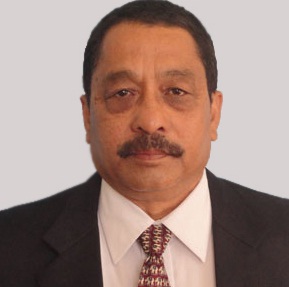
Amar Shah
The Battlefield
"How could I say no! ….. but, use public bus if you have decided to come… …., not your official vehicle … … "
My cousin was popen and transparent. His intention was clear that I should not come. But, I could not change my decision. The desire within me was boiling and compelling me to revisit my native remote village after nearly twenty years. I was even frequently visiting my native village in dreams since last few months.
So to say, I had already severed my formal relationship with the native village twenty years back by selling house and land when both my parents passed away. But the desire to revisit the birth place was boiling within me and I has already spent many sleepless nights.
"Have you gone mad……! What do you have there to revisit ?"
My wife was not buying my plan.
"It is not for what is there; rather it is because the village where I was born and brought up is there." I said.
I was trying to make her understand my feelings and was regretting at the same time that I had already sold the paternal property.
" Well, …. the situation in the village then ? It is very bad …. Don't be crazy! I don't want you to go …. …. no need to go". She was determined.
She was afraid of the rising conflict in western hilly districts of the country. My native village belonged to that area.
"I am a government employee for security forces and a local for the rebels. I see no reason to be afraid of ?"
I, in fact was reassuring myself while pretending to console her. I wanted to gather courage.
Maoist insurgency was in peak in the country and my native village- that had been anonymous since centuries was suddenly in the headlines of national and international media. This was the strongest reason forcing me to revisit my village. I wanted to see and understand why the village which was just there without action or reaction for centuries was suddenly all over the newspapers? What was the reason for this? I wanted to know myself.
I followed my cousin's advice and decided to travel by public vehicle even though I could have travelled by office vehicle. One fine morning, I caught the first shabby bus from Nepalgunj bus station and started my journey to my birthplace. It was a journey restarted after a long gap of more than two decades.
Two third of the passengers in the bus were Kaalipaare (people who go to Himanchal or Uttarakhand in India for seasonal petty jobs) returning home from India. The air in the bus was filled with strong sour smell being emitted by their bodies. They had not bathed since months. They were freely smoking cigarette and bidis (tobacco rolled in dry leave) in the bus.
People from western hills, who owned no or very little land or had no work except farming have been going to Kaalapahad (places of Uttarakhanda India) to support their families since ages. They start going to Kaalapahad at the age of ten- twelve and spend there more in India than in Nepal. Every time they go to Kaalapahad they work there for one or two years, return home, pay the debts borrowed by their families, and return to work again. This was the system established during Rana Regime; it continued through monarchy and was continuing even in democracy. Change in rulers had no effect peoples life- the scene in the bus was evidence in itself.
"How long have you been to work?" I asked a young fellow sitting next to me.
"It's been three years sir"
"And earning?" I asked casually.
"Not much…. … I survived, ….. would be glad if I could pay the loan borrowed in my absence by my family to survive ". He was very clear.
This is common. The family spends more than the family member in India brings home. And thus, the tradition continues. Living in loans is similar to standing in swampy land - the more you try to escape, the more you are trapped into it.
Despite too many passengers and luggage and the bus being filled with cigarette smoke and smell of sweat - the initial part of the journey from Nepalgunj to Tulsipur was not that difficult. The road was black top and the travel manageable. Journey started being difficult after we crossed Tulsipur.
The road was earthen and the bus had to climb stiff heights and negotiate sharp bends.
"Sir! Could you hide the newspaper please?" The conductor requested politely.
"Why? …. is not this just a newspaper" I was amazed.
" It is, but they may trouble you at the police check post." Was his flat reply.
I had read about newspapers being not allowed in remote hill districts of Rapti zone, but experienced this myself. I squashed the newspaper I was reading and threw out of the window. I was not in mood to invite unanticipated challenges.
The luggage security check at Kapurkot was very tight. I felt the checking was similar to checking in many international borders. All the bags, sacks and boxes were opened and thoroughly examined.
"Why is checking so strict? These after all are only ordinary workers" I asked a police at the post.
"It seems you don't know what you are talking about ! These people get trained in India, come here and perform terror. Most of these guys are either Maoists or their supporters."
The constable replied.
I didn't want to get into debate with police. So, kept quiet. Whatever I had read or heard was true !
I was experiencing it myself.
I reached near my village after walking two and half hours from the last bus stop. I was boiling with excitement as I was visiting my village nearly after twenty years. The primary school building where I went was still there at the top of the village. The building was same as it used to be then.
Only additions were some teashops and a armed police camp nearby the school.
"A cup of tea please". I pulled a chair outside a tea shop.
We used to spend our time playing and fighting and used to go home with the broken buttons and clothes colored and covered with dust in the evening. Narayan Upadhaya was the only teacher in the school who used to teach all the classes from standard one to five. He used to sleep on his chair after assigning us class work. When nap disturbed due to our noise often he used wake up and thrash us hard with a bamboo cane he used to carry all the time.
"You seem new, ….. where are you from ?"
Shopkeeper was curious and wanted to learn more about me. In countryside, it was common to ask ones native place and surnames. He was very polite, may be because of my expensive clothes, bag and glasses uncommon in the locality.
"From Dhulkharka "
" Dhulkharka ! ….. ….. Who is your father sir?
He was surprised and tried to look more polite. I used my father's name to introduce me.
"Had heard about , but you stopped visiting here after you left and we never had chance to meet. How could we know you?"
I could smell deep affection in his tone.
"Are things fine here?" I asked.
"Not at all ! As you know there are security forces in one side and the Maoists in another ……. we are really trapped in middle."
I walked down to uncle's home from tea shop; his house was at the end of the village. It was on the bank of a small stream and could be reached there by crossing the entire village. The village was divided in to two parts. The houses in the east belonged to so called higher cast families while so called low caste people were settled in the west. There was a small stream in middle dividing two settlements. The stream was still there but the thick pine forest on both the sides of the stream was gone.
There was not much change in the village. There were few new houses built while a few had been destroyed. One noticeable change was thatched roofs had decreased and there were more houses with corrugated sheet roofs now. Scattered along the length of hill there were one hundred twenty to one hundred twenty five houses erected in silence and they looked as if they were mourning.
Uncle was smoking, sitting on a wooden log outside his house. I went to him and bowed my head. He was the senior most member of our extended family and he lived in the houses where I too was born and brought up. That was when they lived in a joint family before my parents got separated.
"Look, who has come !"
Uncle, after recognizing me started shouting in excitement. All the family members came out of house and surrounded me. We were all hugging each other and crying, smiling and sharing happiness together for few minutes.
"You came because you love us and this place, but the situation here is no more it used to be once … ….. unfortunately the things are not normal ."
Uncle was smoking.
"They say two people were killed by security forces in Darmaakot yesterday. Six-seven people have been killed within this month in this area alone. " My cousin added.
"This is all due to Kali era ! there will be more turmoil and mass killing ".
Uncle walked to restroom about fifty meters far.
"Have 'thry' troubled you?" I asked to cousin.
He had served as elected chief of local panchayat for two terms and their family was better off in the locality. In addition, this family belonged to so called high cast and had all the characteristics of a feudal family as per Maoist definition. I was curious to know what the rebel's policy was towards the uncle and his family.
"I have not been troubled yet, ….. may be because I am not active politically and have not joined any political party after restoration of multiparty system. But, I don't expect this to last long, they don't think they will spare us". He said.
Cousin pulled out four-five pamphlets with appeal to support ongoing 'people's war. The pamphlets were issued by different wings of the rebel group but the message was same. The hidden message in all this was warning of dire sequences if someone does no support the rebels.
"How many people from our village have joined the rebels ?
I was finding it hard to believe that even people from my village which had remained silent for centuries had joined the movement. This was reality beyond my imagination.
"Nearly a dozen went underground. I don't know who others are, but, your friend Padam is the secretary for our area."
I recalled Padam, who used to be my intimate friend till our primary school. He dropped school due to financial compulsions after class five and went to Kaalapahaad to support his family. He had visited me once ten years back when I was posted in Nepalgunj town bordering India.
We had early dinner and closed the door. But, continued to ruminate over memories of old days under pale light of lantern till midnight. We wanted to share family history and experiences and emotions but insurgency and violence kept on returning as topic of the discussion unknowingly.
"This is real Kali era; the world is no longer suitable place to live!"
Uncle was first to go to bed.
"Is it really hard to live here?"
I tried to explore the situation further.
Many of my relatives had already migrated out from the village but he had no plan to follow and was not ready to leave. I wanted to know the situation through his eyes.
"If we give donations and food to rebels we are labeled as supports of the insurgency, if we offer shelter to security forces we are accused of being spies. We are in real trap." My cousin seemed in confusion.
"We though poor, were living in peace since ages but now neither we have happiness nor peace. There is firing and bombing every day and we are forced to live in fear and uncertainties."
My cousin after a short pause for breath continued.
"I hope , you can guess our condition very well … …."
Now I could sense that he also had started thinking about migrating out of the village.
Dom … Dom … Dom… there was firing and we heard the sound. Suddenly torches (mashals) were lit all around the top of other villages.
"Boys (Maoists) firing the guns a sort of show of strength. It happens often…. …."
He sounded neutral.
"Do you think the 'boys" are wrong ? I asked him. I also used the term 'boys' for rebels.
"I don't think so, but……….."
My cousin explained the sufferings the villagers were passing though due to insurgency.
We talked for hours and went to bed vey late.
People started coming to visit me since morning. I found no difference in their affection and attachment though I was visiting the native village after nearly twenty years. In the village where I was absent for twenty years, I found so many people who loved and respected me but there were not even twenty people who really loved me in the city where I have been living since last twenty years.
I could clearly see the differences in urban and rural values.
"We are in patrol! …. …. Can we have a glass of water?"
In the morning of fourth day, when I was sipping tea, two dozen police men arrived on the front yard.
Suddenly there was only sound of their boots in the air. They requested for water. Their arrival was not expected but we could not deny to offer them water.
"Are not you the same person who came two days back? You are a government employee better you leave the village early. Situation is not good."
They had information of my arrival. I couldn't make out whether the Inspector or sub inspector whoever was the guy, was threatening or suggesting me.
"Why? Are we not allowed to visit here?"
I didn't like his tone. I felt he was threatening me.
"You know the condition, …. … we have to keep a watch, whether you are an officer or ordinary citizen "
He was not ready to explain more. He led the troops and they left. I heard the sound of their boots for some time.
In the evening, the cousin looked more serious.
"Better we also leave the village ….. "
I could clearly see worries painted all over his face. His face, in the light of deem lantern looked very pale.
"Something wrong ?"
I guessed something must be terribly wrong.
He took out a sheet of carefully folded paper from his pocket. It was a hand written letter addressed to him. I read the letter immediately.
He was thanked for maintaining neutrality in the ongoing people's war so far. As the war was entering in decisive phase soon, they had asked him to come out openly in favor of the mases. If not….
"Now?"
I looked at him with big question.
He did not reply. It was easy to plan to leave the village. But, it was difficult to really leave the native place. One always has to be careful and bold enough while taking decisions in such situations.
"I can no longer live in this village…."
Was the first announcement he made in morning. He must have spent whole night without sleep to take this decision.
"Let me go to Nepalgunj with you day after tomorrow. I need to make arrangement for taking my family out of here…"
He sounded very much determined.
I looked at him. I could see different expressions passing through his face, result of different thoughts boiling within him.